Trojan Virus: What It Is, How It Works, and How to Recognize It

Trojans: how they spread, what damage they can cause, and how to recognize them. Comparison with viruses and worms, main types, and examples such as Zeus and Emotet.
- Posted on 2026-10-10
- Reading time: 6 min
Trojans: How They Hide, Types, and Differences from Viruses #
A Trojan horse is malware that disguises itself as a legitimate or useful program to convince the victim to install it voluntarily. The technically correct term is "Trojan," but in common parlance it's often also called a "Trojan virus" or "Trojan virus"—a common inaccuracy, because, as we'll see shortly, a Trojan horse isn't a virus in the technical sense, but that's how most people look for and recognize it. Unlike a virus or a worm, it's not defined by its ability to self-replicate: its defining characteristic is its disguise, not the technical impossibility of propagating in other ways—a Trojan horse can easily download other malware or pave the way for self-propagating components, while still remaining a Trojan in its initial phase. The name comes precisely from there: like the wooden horse used to infiltrate Trojan, the danger isn't in the package, but in what's hidden inside.
In short: a Trojan horse is malware that disguises itself as legitimate software to be installed by the victim. Unlike viruses and worms, it doesn't self-replicate: its defining mechanism is deception, not an absolute limit on what it can do next.
Trojan vs Virus vs Worm: the Difference #
The three terms are constantly confused, but they describe opposite mechanisms:
| Trojan | Virus | Worm | |
|---|---|---|---|
| Self-replication | It is not its distinctive feature | Yes, via a guest file | Yes, independently |
| A guest file is needed | No | Yes | No |
| How it spreads | Tricks the user into installing it | Running an infected file | Exploit networks and vulnerabilities |
| Main feature | Masking to get execution | Replication via guest | Autonomous propagation |
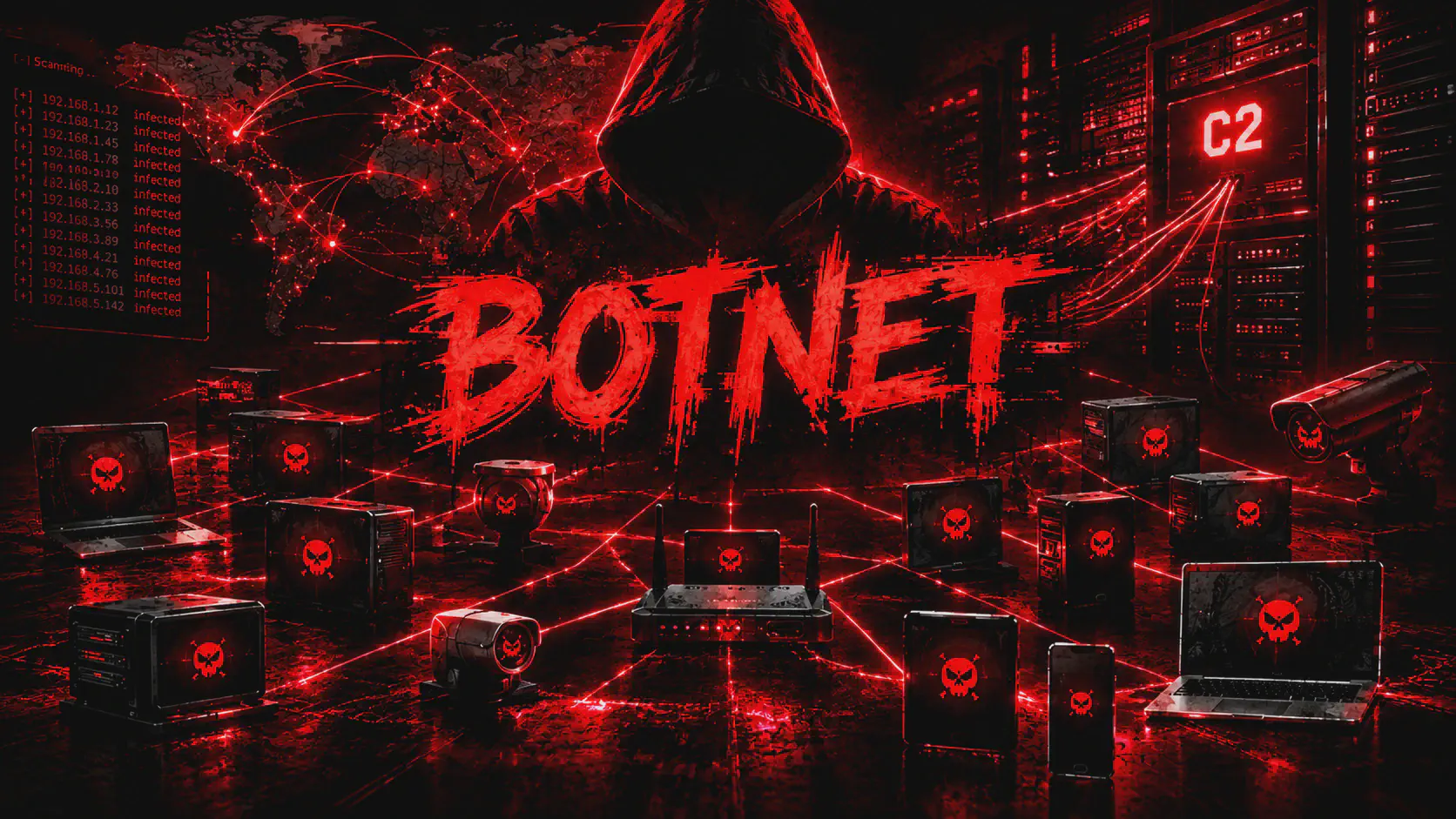
Viruses and worms are defined primarily by how they multiply ; a Trojan is defined by how it tricks itself into execution, not by its propagation. The categories, however, often overlap more than their names suggest: a Trojan can download ransomware, open a persistent backdoor, or install components that turn a device into part of a botnet —Emotet, which we'll discuss shortly, started out as a banking Trojan and ended up distributing ransomware on behalf of other criminal groups.
How a Trojan Works #
The mechanism relies on a single element: convincing someone to voluntarily do what a virus or worm would technically accomplish. The most common vectors are email attachments that pretend to be urgent invoices or documents, pirated software or cracks for paid programs, downloads from unofficial sites pretending to be updates or codecs needed to watch a video, and fake antivirus programs that report a nonexistent infection to push the installation of something supposedly "fixing" it. Once executed, the Trojan silently installs its payload—often without any visible symptoms, because its goal is to remain undetected for as long as possible, avoiding the notice of a virus with an immediately destructive payload.
The "State Trojan": When the Judiciary Uses It #
In Italy, the term "Trojan" is also associated with a specific, legal use: a computer interceptor , commonly called a "state Trojan," is software with the same technical capabilities as a RAT (activating webcam and microphone, reading even encrypted messages, accessing files) that prosecutors can install on a device as part of an investigation, subject to judicial authorization. The Supreme Court of Cassation, sitting jointly in the Scurato ruling of 2016, initially limited its use for interceptions involving "presence" (environmental) interceptions to organized crime only; subsequent legislative reforms (Law 103/2017 and the subsequent decrees) then extended the regulation to other serious crimes, including those against public administration. This is an interesting case precisely because it demonstrates that Trojan technology is neutral: everything changes based on who uses it, with what authorization, and for what purpose.
The Most Common Types of Trojans #
| Type | What does he do |
|---|---|
| Backdoor | Opens permanent remote access to the system for the attacker |
| RAT (Remote Access Trojan) | Trojan designed to give the attacker remote control over the device — commands, files, often webcam, microphone, and keylogging |
| Banking Trojan | Steals banking credentials by intercepting home banking sessions |
| Downloader / Dropper | It has no payload of its own: its only function is to download and install other malware |
| Fake antivirus (scareware) | Simulates an infection to convince the victim to pay for an unnecessary or harmful “cleanup” |
| Trojan SMS | It attacks mobile devices, sends SMS to premium rate numbers or intercepts messages |
Famous Trojans in History #
| Trojan | Year | Categories | Impact |
|---|---|---|---|
| AIDS Trojan (PC Cyborg) | 1989 | Ransomware before its time | First documented case of extortion through encryption |
| Zeus (God) | 2007 | Banking Trojan | Over 3,6 million computers infected in the US alone |
| Emotet | 2014 | Downloaders / Malware-as-a-Service | Europol calls it “the most dangerous malware in the world” |
AIDS Trojan (1989). Distributed via mailed floppy disks by its creator, Joseph Popp, it counted computer reboots and then encrypted directory names, demanding $189 sent to a post office box in Panama to “renew the license.” It is considered the first documented case of what we now call ransomware—more than thirty years before its modern forms.
Zeus (2007). A banking Trojan that stole credentials by intercepting online banking sessions and manipulating the pages viewed by the victim. At its peak, it infected over 3,6 million computers in the United States alone. Its source code, leaked in 2011, spawned numerous variants (GameOver Zeus, Citadel) that were still observed in modified form years later.
Emotet (2014–2021). Originally a banking Trojan, it evolved into what researchers have dubbed the “FedEx of cybercrime”: it didn't attack directly, but sold access to infected devices to other criminal groups, who used it to distribute further malware and ransomware (including Ryuk and Conti). In January 2021, its infrastructure—hundreds of servers worldwide—was seized and dismantled in an international operation coordinated by Europol and Eurojust , with the cooperation of eight countries. Emotet then resurfaced in a modified form months later, demonstrating how difficult it is to completely eliminate such a criminal infrastructure.
How to Recognize a Trojan #
A good Trojan horse is designed to hide its obvious signs, but some telltale signs are recurring: sudden slowdowns for no apparent reason, programs that start automatically, an antivirus program reporting a detection after installing software downloaded from unofficial sources, network traffic to unknown destinations, or online accounts displaying unrecognized logins—all signs that credentials may have already been stolen. On Android , where banking Trojans are particularly prevalent, a specific sign you shouldn't ignore is a request to enable "Accessibility Services" from an app that doesn't specifically need it: this is the permission these Trojans most often use to read the screen and intercept credentials entered into other apps. None of these signs are definitive on their own, but an antivirus detection after installing something downloaded from a "not-so-official" site should always be taken seriously, not ignored.
How to Remove a Trojan #
- Isolate the device from the network to prevent a potential backdoor from communicating with the outside or downloading other malware.
- Start a full scan with an updated antimalware — detects most known threats, but does not guarantee complete removal if the Trojan has already installed other components.
- Check recently installed programs and manually remove unrecognized ones, especially if they were installed with pirated software.
- Change potentially exposed credentials — especially online banking and email — from a different, clean device.
- If the Trojan has opened a backdoor, consider a full system restore from a clean image: there's no guarantee that a scan alone will remove everything you've installed since.
How to Protect Yourself from Trojans #
The most effective defense remains the simplest to state and the most difficult to consistently implement: don't install software from unofficial sources—cracks and keygens for paid programs remain among the most exploited vectors for this type of malware. Added to this are the same best practices that apply to all malware: be wary of unexpected email attachments, even if they appear to come from known senders, maintain an updated antivirus program that can recognize the signatures of the most common Trojans, and check the permissions required by an app before installing it, especially on mobile devices.
FAQ #
What is a Trojan? It's malware that disguises itself as legitimate software to trick the victim into installing it voluntarily. Unlike viruses and worms, it doesn't self-replicate.
What's the difference between a Trojan and a virus? Viruses replicate by infecting other files; Trojans aren't defined by replication, but by the disguise they use to entice the victim to install them.
Can a Trojan spread on its own? It's not the autonomous propagation typical of a worm that defines it—a Trojan simply stays where it was installed. However, it can download other malware or components that spread on their own, which is why a single infection should always be treated as a potential starting point, not an isolated event.
What is a RAT? It's a Remote Access Trojan, a Trojan that gives the attacker complete remote control over the infected device—often including the webcam, microphone, and keyboard.
Does an antivirus always detect a Trojan? Not always: newer or more targeted Trojans can evade detection based on known signatures, which is why anomalous system behavior remains as important a warning as the antivirus itself.
Does Emotet still exist? The original infrastructure was dismantled in 2021 by an international operation, but it reappeared in a modified form months later—an example of how difficult it is to completely eradicate a malware infrastructure spread across hundreds of servers.