Spear Phishing: What It Is, What It Means, and How It Works

Spear phishing: meaning, what it is, how a targeted attack works, and the differences from mass phishing, whaling, and BEC, with a real-life case worth $46 million.
- Posted on 2026-10-28
- Reading time: 5 min
Spear Phishing: How It Works, Examples, and How to Protect Yourself #
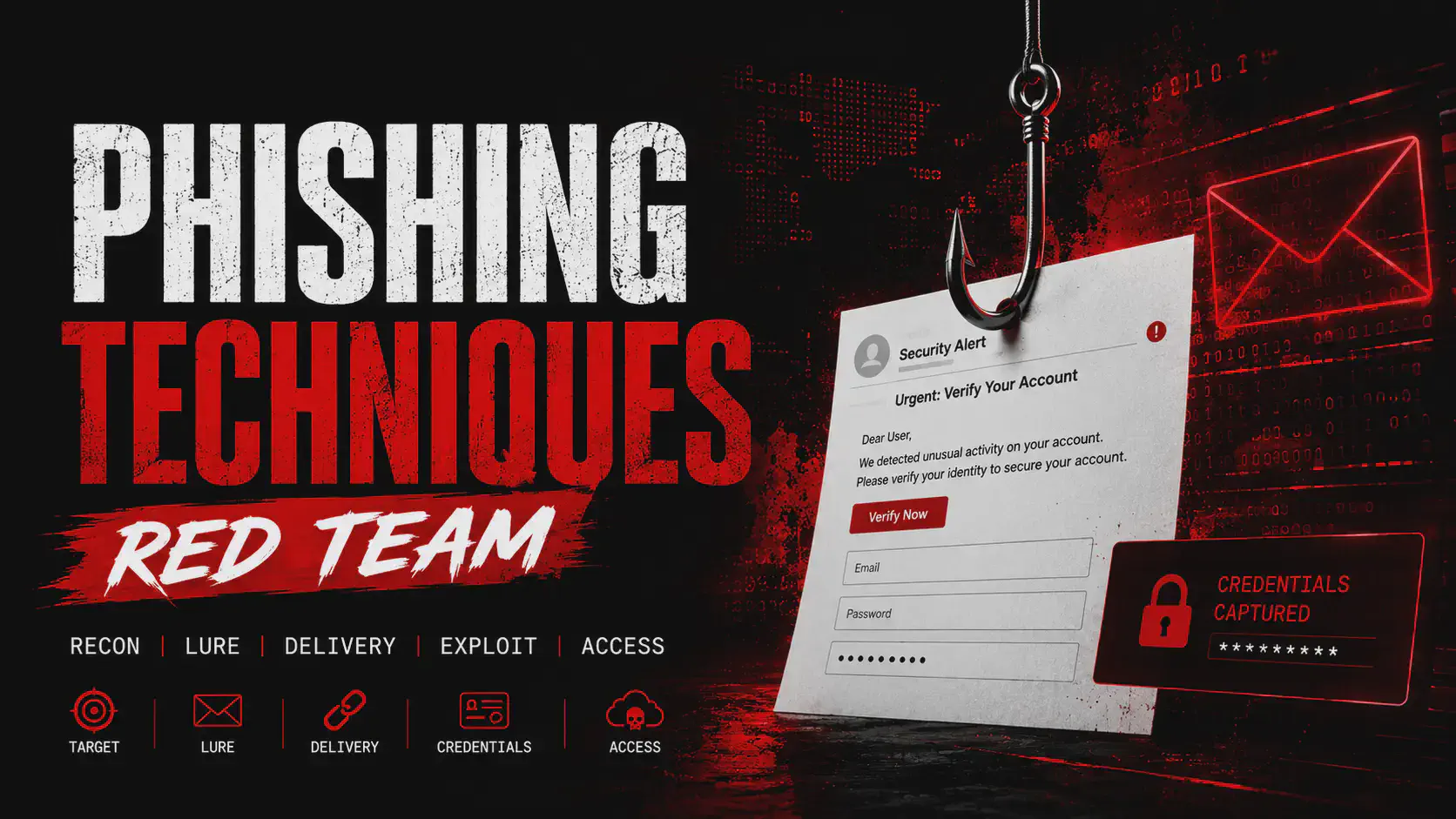
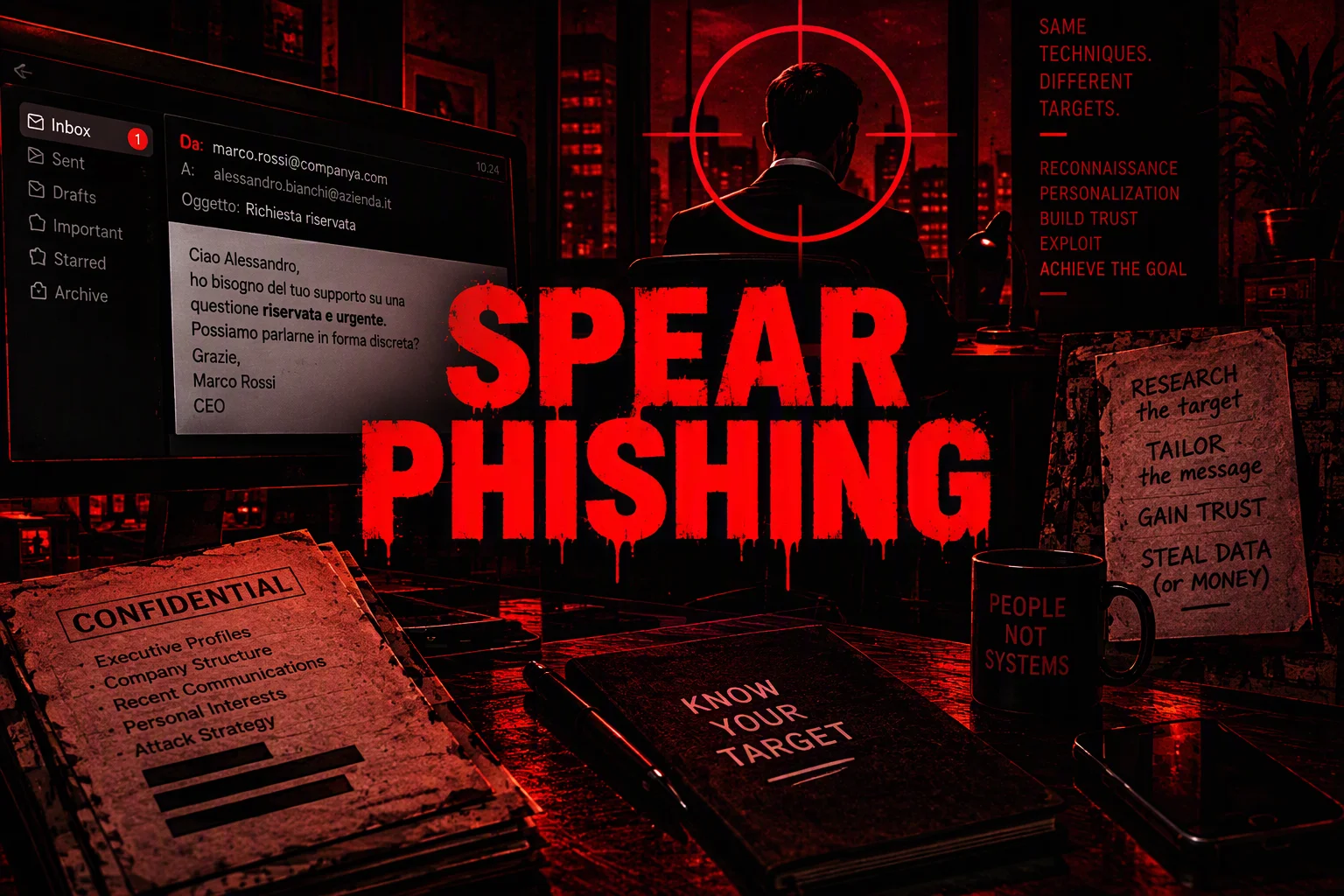
Spear phishing is a targeted form of phishing : instead of sending the same generic message to millions of recipients, the attacker targets a specific person or organization and craftes a tailored message, using real details to make it believable. The name comes from fishing: you don't cast a net (mass phishing), you hit a specific target with a harpoon.
It's a low-volume but high-impact technique: in a Barracuda analysis published in 2023, spear phishing emails accounted for less than 0,1% of all email attacks analyzed, but were linked to approximately 66% of the breaches observed in the sample studied.
Phishing and spear phishing: what's the difference? #
Mass phishing focuses on volume: the same message to many people, hoping that a small percentage will bite. Spear phishing focuses on precision: a message tailored to a specific target, using real information about them.
| Mass phishing | Spear phishing | |
|---|---|---|
| recipients | Thousands or millions, the same message for all | A specific person or small group |
| Customization | Minimal or absent | High: name, role, company, real context |
| Preparation | Bassa | Requires prior reconnaissance on the target |
| Typical goal | Generic credentials, small amounts | Targeted access, large sums, sensitive data |
The difference is not the channel or the content itself, but the reconnaissance effort that precedes the attack.
How a spear phishing attack works #
- Reconnaissance (OSINT): The attacker gathers public information about the target through LinkedIn, the company website, press releases, social networks and, when possible, previously leaked emails data breach .
- Selection of the pretext: Choose a plausible context based on what you have discovered: an ongoing project, a real supplier, a company event, a professional relationship.
- Message Construction: writes an email (or other message) that mimics the style, language, and information the target would expect from that sender.
- Delivery: sends the message, often with a sense of urgency or perceived authority (a boss, a client, a trusted colleague).
- Exploitation: the click leads to a credential harvesting site, a malware attachment, or the message itself directly asks for an action, as in Business Email Compromise .
Spear phishing, whaling, and BEC: How they're connected #
These three terms are often confused because they are closely related:
| Type | Target | Relationship with spear phishing |
|---|---|---|
| Spear phishing | Specific individuals or roles | The general term for any targeted phishing |
| Whaling | Executives and Board Members (C-suite) | A subset of spear phishing: same principle, very high-level targets |
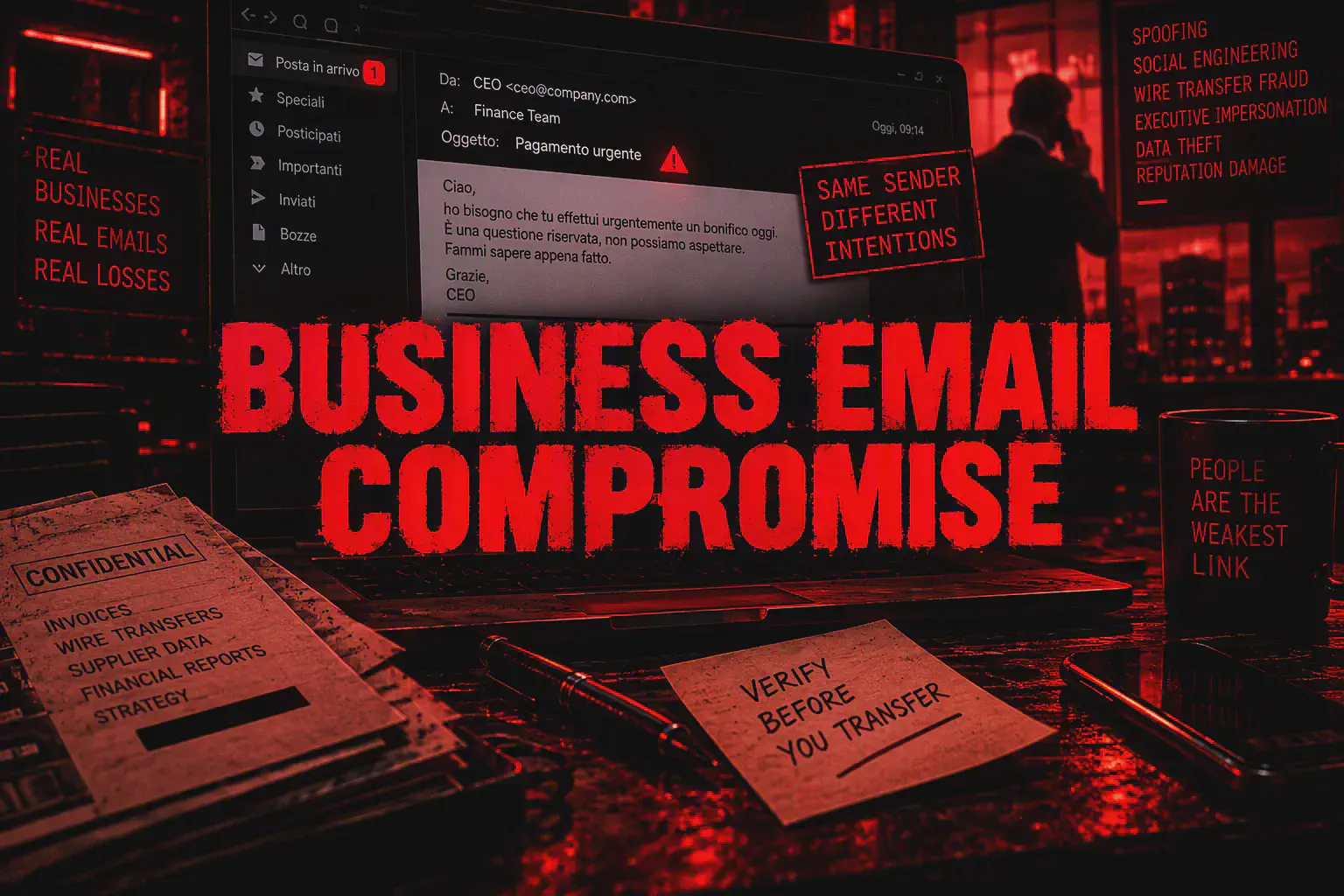
| Business Email Compromise | Finance teams, accounts payable | It often uses spear phishing as the initial vector, but specifically aims to manipulate business payments |
In practice: spear phishing is the technique, whaling and BEC are specific applications of that technique towards particular targets or objectives.
| Phishing | Spear phishing | Whaling | BEC | |
|---|---|---|---|---|
| Target | Broad, generic | Specific | Executives and C-suite | Companies, financial processes |
| Customization | Bassa | High | High | High |
| Categories | Basic technique | Targeted technique | Subtype of spear phishing | Fraud category, may use spear phishing |
Why spear phishing works so well #
- Credibility:: Real details (names of colleagues, current projects, company events) lower the victim's natural defenses.
- Perceived authority: pretending to be a superior or an important client reduces the propensity to question the request.
- Targeted urgency: Unlike a generic mass email, the pretext is tailored to the target's real-world context, so it seems more plausible.
- Bypass technical filtersA purposefully written message, without large-scale repeated patterns, is more difficult for signature- or volume-based anti-spam systems to intercept.
Finance and accounting teams are significantly more frequently targeted than other departments, precisely because they have the authority to authorize payments—a high-value target for those seeking direct financial gain.
Spear phishing and artificial intelligence #
Generative AI has changed the economics of spear phishing. An academic study by Heiding, Schneier, and Vishwanath (2024), conducted on 101 participants, compared several approaches:
| Tested group | Click-through rate |
|---|---|
| Generic Phishing (Control) | 12 % |
| Emails written by human experts | 54 % |
| Emails generated entirely by AI | 54 % |
| Human-supervised AI (human-in-the-loop) | 56 % |
The interesting finding isn't just the effectiveness, equal to that of a human expert, but the cost : generating personalized content at scale, once the task of a dedicated operator for each target, now requires a fraction of the time and effort of a human. It's important to remember that this is an experimental study on a specific sample, not a universal average rate valid for every real spear phishing campaign.
This means that the barrier to entry for campaigns once reserved for highly organized groups has been lowered: automated reconnaissance of social profiles, text generation, even voice clones to strengthen credibility in a second telephone contact (a technique that is intertwined with vishing ).
Real-World Case Study: Ubiquiti Networks, $46,7 Million #
A well-known example of how costly targeted impersonation can be involves Ubiquiti Networks , a US networking company: according to the company's SEC filings, an impersonation scam (classified as a business email compromise ) led to employees in its finance department transferring funds to criminally controlled overseas accounts, totaling approximately $46,7 million . The case illustrates the key to a well-constructed targeted attack: no sophisticated malware was needed, just careful reconnaissance and credible messages to the right people.
How to recognize a spear phishing attempt #
| Signal | Why should it arouse suspicion? |
|---|---|
| Unusual request for the context | Even if the sender appears legitimate, an out-of-the-ordinary action warrants investigation. |
| Urgency combined with specific details | Using real information does not guarantee the authenticity of the message |
| Response channel different from the original | “Reply to me here” with a slightly different address than usual |
| Pressure to bypass normal procedures | “You don't need your manager's approval this time.” |
| Sender domain almost identical | A different character, a different extension, a swapped letter |
How to defend yourself from spear phishing #
At an individual level:
- check for unusual requests on a channel other than the one they came in through (a phone call to a known number, not the one in the message);
- Always check the sender's exact email address, not just the display name;
- Be wary of messages that urge you to bypass normal procedures, even if they seem urgent.
At company level:
- email authentication (SPF, DKIM, DMARC) to reduce corporate domain spoofing;
- MFA on all accounts, especially those with access to financial systems;
- double approval procedures for bank transfers and changes of bank details;
- targeted simulations, not just generic training: testing realistic scenarios in high-risk departments such as finance and accounting;
- limit the public exposure of sensitive information on organizational charts, roles, and ongoing projects, which fuel the attackers' reconnaissance.
Frequently Asked Questions About Spear Phishing #
What is spear phishing? #
A form of phishing aimed at a specific person or organization, constructed with real details gathered in advance to make it more credible than generic phishing.
What is the difference between phishing and spear phishing? #
Mass phishing sends the same message to many recipients, hoping for a few clicks. Spear phishing hits a specific target with a personalized message, with a much higher success rate.
What is whaling? #
A variant of spear phishing that specifically targets a company's executives and board members.
What is the difference between spear phishing and BEC? #
Business Email Compromise often uses spear phishing as an initial technique, but is specifically geared toward manipulating payments or business processes, not just stealing credentials.
Why does spear phishing have such a high success rate? #
Because it uses real details about the target, gathered in advance, which lower natural defenses and make the message much more credible than a generic email.
Has artificial intelligence made spear phishing more dangerous? #
Yes. One academic study measured a 54% click-through rate for AI-generated spear phishing emails, on par with those written by human experts but at a fraction of the cost and time.
Who is most often targeted by spear phishing? #
Finance and accounting teams, executives, and anyone with access to sensitive systems or authority to approve payments.
How can I protect myself from spear phishing? #
Check unusual requests on a different channel than the one they came in through, always check the sender's exact email address, and use MFA, email authentication, and two-factor verification for payments in businesses.
Is a personalized message always spear phishing? #
No. Simple personalization isn't enough: spear phishing involves carefully targeting a specific target and using real-world contextual information to enhance the attack's credibility, not just inserting a name into an email template.